Kathmandu: Arrival Day

Well the trek to get to Kathmandu so as to be able to trek there is long and arduous. At least from Washington, D.C. anyway. There is no direct route to Nepal, so two layovers, one in Munich and one in Istanbul, and approximately 27 hours were required to finally get here. Somewhere in that transit I lost the better part of a day as well. But I made it and the real trekking starts tomorrow.

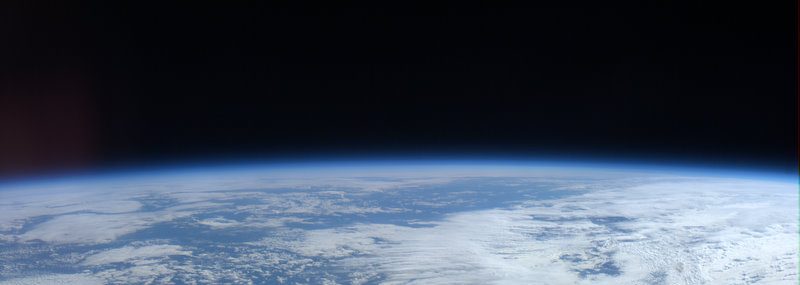
Look closely. Not everything in this photo are clouds. Those are the highest peaks of the Himalayas popping out through the cloud layer.
The approach plate into Kathmandu must be an interesting one; I will have to go find it. Departing Istanbul the captain announced we would be flying at 35,0000 feet but that shortly before reaching Kathmandu we would go to 37,000 feet. That was my first clue that something odd was going to happen. I had a window seat looking east as we were nearing the approach corridor for Kathmandu and even though there were clouds in the area, I could see the giant peaks of the Himalayas emphatically rising above the cloud layer. From my vantage point the distant peaks looked near equal to us in altitude- amazing. As we were finally cleared for the approach I heard the gear go down and looking out the window was surprised because we were still rather high up (I think we were still in the neighborhood of 37,0000 feet). I watched intently as we continued because I did not believe that the pilot necessarily decided to release the gear early. Thus because of our apparent high altitude at that moment, I expected the topography of the ground to undergo some dramatic changes as we executed the approach. Sure enough, as I stared down fascinated at the flat, distant plain we were gliding over, it began to rapidly give way to low hills, then almost immediately to an extremely craggy, steep, tooth shaped series of variously sized towering mountains. The slopes, despite their steep character, were terraced everywhere and on the ridge lines I could see dotted here and there what looked like dwellings. The few roads that I saw had some incredible switch-backs. The ravines between the peaks did not seem wide enough to settle, although occasionally there was some farming occurring.
As we got closer to the city, the number of buildings increased and I saw solar cells on almost every roof. The overall construction reminded me a bit of what a large Lego village might look like. The buildings were rectangular or square and had the same kind of blocky, rugged look that comes with offset Legos. From the air the city presented a cheerful atmosphere as the houses and roof colors ranged from beige and white to purple, blue and pinks. Most of the construction was low to the ground; there were only a few really tall buildings in sight.
Once off the plane I was able to breeze through immigration control and customs. I already had a visa- that avoided line #1 and I did not check any luggage- that avoided line #2. Once outside, despite the chaos of the airport, I easily located my guide, Prem, who had offered to come and pick me up and deliver me to my hotel. I enjoyed the drive to the hotel because when I am in new places it is always interesting to examine and observe the driving patterns and habits (See blog about traffic in the “General Travel” category.) and Kathmandu did not disappoint. They drive on the left, for the most part. At least that is what the initial condition is, but I would not call it a constraint. There were many, many motorbikes and motorcycles on the road and the cars, of course, were generally small A traffic cop on each corner served to reset the lanes at the intersections but in between those moments random motion was the norm. The chaos and tempo reminded me of India. Cars or bikes turned on a dime heading in whatever direction they fancied, and like an experience I had in Russia decades ago, the number of lanes of traffic heading in one direction or the other was not constant, but fluidly adjusting to the volume of the vehicles traveling through. Because the speeds were not so great the ebb and flow required to accommodate the Brownian motion worked fine. It was fun to watch!

All the luggage needed for a several month trip. 25% of the volume is a sleeping bag, unfortunately.
After I dropped off my things at the hotel, Prem, my guide, offered to help me navigate the purchase of a local SIM card for my phone. Since I am going to be here for a few months it seemed like a worthwhile investment. I’m proud to say I am now the owner of a local Nepalese phone number! He also offered to take me to dinner later in the day but I declined for several reasons. I wanted to walk around a bit on my own, it was doubtful that I would be super hungry later, and I also did not want to take up his time. Stating that he would see me at 6:45 am the following morning and encouraging me to call him if I needed anything, Prem took his leave. Shortly after that I ventured out into the street to see the local sites and check out the atmosphere.
I am staying in the Thamal district which is the big hiking/trekking tourist area so I felt quite comfortable strolling around although I had to pay a bit more attention to the street than I could to the many different types of colorful stores I was passing. The “street” is really more of a wide lane, many of them dirt, some concrete and none with sidewalks. Depending on which one I was walking along it was either pedestrian only, pedestrian, rickshaw and motorbike only, or free-for-all, including cars. The motorbikes and rickshaws simply maneuvered around the pedestrians but it was still necessary to pay attention. The store fronts go straight up to the roadway with a very small, and not very effective looking shallow gutter lining each side of the passageway. It rained off and on this afternoon creating puddles and muddy spots that both pedestrians and vehicles tried to avoid.
There were prayer flags hung across the street and an occasional small temple guarded over an intersection. What was fascinating to me however were some of the every day ordinary things I observed. Almost every electrical utility pole looked like a nest of snakes with wires going every which way. I cannot imagine that anyone would know how to trouble shoot a problem, or trace a line should the need arise. I also passed a team of six people demolishing a brick building. Most of it was already down and there were numerous piles of sorted bricks on the resultant vacant lot. What was left standing, that the crew was working on, was part of the wall adjacent to the next (intact) building. It was the method of demolition that caught my eye. A guy with a metal rod, about 1.5 meters long was standing on a pile of previously demolished bricks poking at the remaining standing wall slowly dislodging dirt, cement, and broken bricks. After a bit of (hopefully) strategic prodding, he was able to pull a larger section of the wall down. Then the rest of the team, carrying baskets, would load up the bricks and move them to the sorting pile. Then the whole process would start over again. One wonders how long they’ve been at it if this methodology has been used for the whole of the building!

A typical example of an electrical utility pole!
Many of the stores clearly targeted the tourist trade, not surprising given the locale. Stores selling hiking and trekking gear were prevalent as were shops selling pashmina and cashmere scarves. Other popular items were woven and sewn hand crafted bags, rugs, clothes, and wall decorations as well as various and sundry items related to Buddhism and Hinduism. It was all very fascinating and I suspect I may have to do some Christmas shopping before I leave the country. I got off the beaten path a bit and found some produce markets, a small pharmacy, some walk up liquor stores, hair dressers and other shops serving daily needs that you can find the world over. Rain and the need to get my gear re-packed and re-organized for the next day cut my explorations short.
We leave tomorrow, early, so I’m planning on spending some more time in Kathmandu at the end of my trip. There are several interesting historical sites to visit.
Tomorrow starts the Langtang Valley trek.


Glad you arrived safely, Sandy! I’d be fascinated to hear how you navigate the food offerings in a foreign land and how you adjust to the time and atmosphere change.
Buen Camino!
Karen B